Thinking about dividing up acreage in Grayson County? It can be tempting to look at a tract’s size and assume subdivision will be simple, but in rural North Texas, the real answer usually comes down to access, drainage, utilities, septic feasibility, and county rules. If you want to understand whether your land may be easier to split, more complex than it looks, or worth a closer review, this guide will walk you through the big factors that matter most. Let’s dive in.
Start With Jurisdiction
Before you think about lot lines, start by asking a simple question: who has authority over the property? In Grayson County, land in unincorporated areas is generally governed by county subdivision regulations, but that is not always the full picture.
The county notes that it has no zoning in most unincorporated areas, outside the Lake Ray Roberts Zoning District and the North Texas Regional Airport zoning regulation. Even so, your tract may still be affected by deed restrictions, restrictive covenants, or HOA rules. Those private restrictions can be more limiting than county rules, so they deserve an early review.
Another key issue is whether the property sits in a city’s extraterritorial jurisdiction, often called the ETJ. If it does, Grayson County’s rules say you must comply with both the county’s standards and the municipality’s standards, with the more restrictive requirement controlling. That can change the timeline, the design, and the cost of a potential subdivision.
Know When a Plat Is Required
In Grayson County, a plat is generally required when an owner divides land into two or more parts to create lots or dedicated public-use areas. That means subdivision is usually a formal process, not just a matter of sketching out a few new parcel lines.
The county outlines a process that may include an optional pre-submittal meeting, preliminary plat review, and final plat approval before recording. The county also states that no grading of streets or roads, and no sale of lots, should begin before final plat approval unless the Commissioners Court authorizes it in writing. For landowners, that makes timing and planning especially important.
A complete plat package is brought before the Commissioners Court within 30 days, according to county procedures. A preliminary plat is valid for one year, and the final plat must be approved and recorded before lots are sold. If you are planning around a sale, estate division, or investment timeline, these steps matter.
Access Can Make or Break a Tract
For many Grayson County acreage properties, access is the first real test of subdivision potential. A tract may look workable on a map, but if access does not meet county standards, the process can become much more complicated.
The county requires lots to have at least 60 feet of width measured along the front property line. Each lot must also abut and have direct access to a county street or road, or to a private or public road built to current county standards with the required dedicated right-of-way.
That is one reason existing frontage is so valuable. If a tract already has good road frontage and does not need new streets or major easements, it may fit more easily into the county’s short plat process. Under county rules, a short plat applies to lots that already front an existing street or road with the required right-of-way width, or where that right-of-way will be dedicated, and where no new streets, roads, or public easements are needed.
If the tract does not have simple frontage, options may still exist, but they usually add cost and review. For example, private streets or roads require a 60-foot minimum access easement, although the Commissioners Court may waive that requirement if owners of 50% of the parcels petition for a variance. On some state-maintained roads, shared access driveways may be allowed when spacing rules cannot be met, but TxDOT approval must be submitted before plat approval.
Frontage Is Not the Only Layout Issue
The shape of the land matters too. Long, narrow tracts or oddly configured acreage can make it harder to create lots that satisfy frontage, access, and setback rules.
Grayson County’s setback standards also affect lot layout. Building setback lines are 50 feet from the right-of-way on state or federal roads and roads on the county thoroughfare plan, and 25 feet on other streets and roads. Those setbacks can reduce the practical building area on smaller or irregular lots.
If a future lot will rely on an access easement rather than traditional road frontage for an E-911 address, the county says recorded documentation must be presented for review. That is another reminder that legal access is not just a planning issue. It also affects addressing and use.
Drainage and Floodplain Deserve Early Attention
A tract can have legal access and still be a poor subdivision candidate if drainage problems are severe. In Grayson County, drainage is a core subdivision issue, not a minor afterthought.
County regulations require topographic contour information on plats. For grades under 5%, one-foot contours are required, and for steeper grades, two-foot contours are required, with closer contours allowed when needed to understand drainage conditions.
The county also requires drainage easements, generally along existing drainage channels. If drainage crosses a street or road, it must be carried in pipes, bridges, or culverts sized by a professional engineer at the developer’s expense. That can change the economics of a tract very quickly.
Floodplain is another major factor. The county requires plats to show the 100-year floodplain and any lots or portions of lots within it. If construction is planned in those areas, a floodplain development permit is required, and the Development Services page states that an elevation certificate is required for development with any Special Flood Hazard Area encroachment.
Where floodplain is present, the finished-floor elevation must be shown. The county also states that it is not responsible for maintaining drainage ways or controlling erosion on private lots, so buyers and sellers should evaluate these conditions carefully before assuming the land will divide cleanly.
Utilities and Septic Often Control Lot Count
In rural subdivisions, utility feasibility can be just as important as survey lines. You may be able to draw a proposed layout on paper, but if water, wastewater, or electric service cannot support it, the plan may not move forward as expected.
Grayson County requires plat notes naming the water, sewer, and electric utility companies serving the subdivision. For short plats, the county may also require letters from utilities certifying service and the schedule for providing it. Utility lines must be placed in dedicated easements, and those easements should be outside the design-year floodplain of the drainage system.
Septic is especially important on rural acreage. Grayson County requires an On-Site Sewage Facilities permit for any new or replacement septic system. County rules also say that smaller-than-one-acre lots are allowed only when soils testing by a qualified evaluator, registered sanitarian, or professional engineer shows qualifying soils and the Commissioners Court approves the smaller lot size.
The county’s rules allow at least one-half acre with access to a public water supply and one acre without a public water supply. If individual wells are proposed, the county says a professional engineer’s report may be required to confirm adequate groundwater supply. In practical terms, that means the number of lots you can create may depend heavily on soil, water access, and septic design.
Existing Roads and Improvements Can Shift Costs
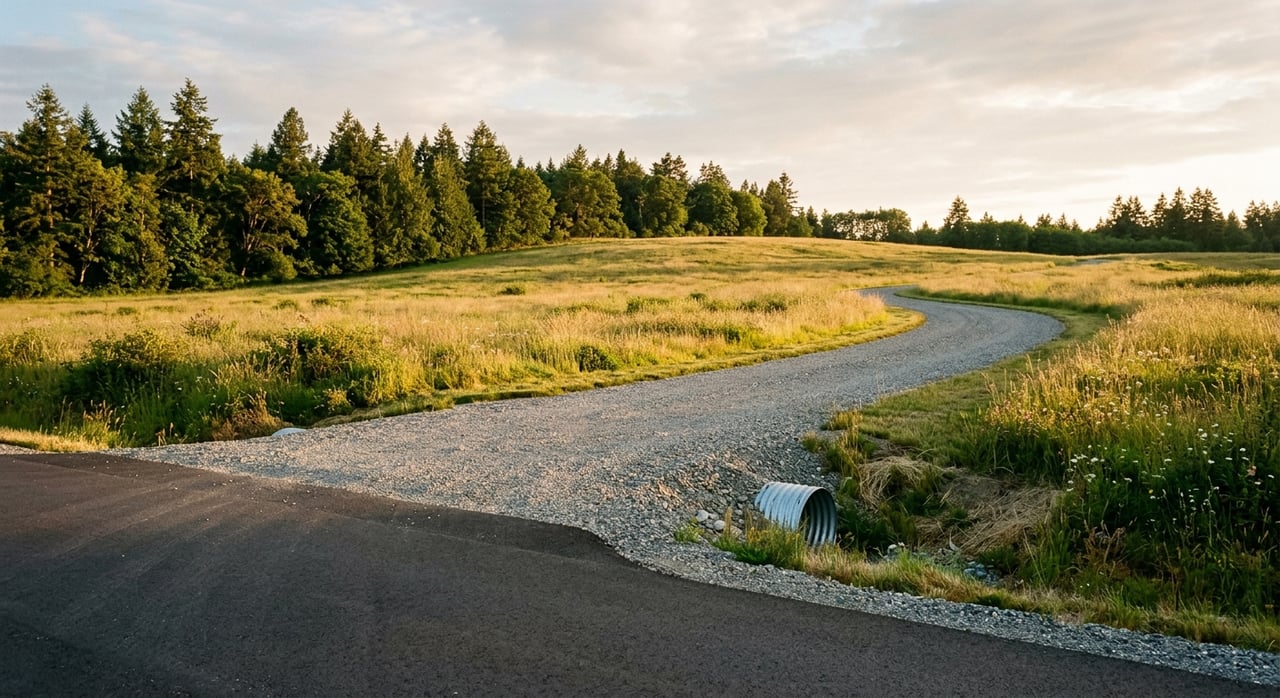
Some acreage already has internal roads, culverts, or other improvements in place. That can help, but only if those improvements meet current county standards.
If roads already exist within a proposed subdivision, the owner must show that they comply with current county requirements. The county may require certification from a Texas-licensed professional engineer. If those roads are substandard, bringing them into compliance can become part of the project cost.
When new road and drainage infrastructure is needed, the developer is responsible for those costs. The county may also require engineering review, inspections, and financial security for improvements. For sellers and investors, this is one of the clearest reasons a tract’s subdivision potential should be judged by more than acreage alone.
Use County Mapping and Process Early
One of the smartest first moves is confirming the tract’s status through county resources before spending heavily on design work. Grayson County’s GIS office maintains mapping that includes FEMA floodplain, roads, city limits, and ETJ data.
The county also uses a Development Certificate for new E-911 addresses, new culvert installations, and floodplain determinations. Those process details can sound technical, but they are useful because they help you identify issues early, before they become expensive surprises.
The county also offers an optional pre-submittal meeting. For many landowners, that can be a practical step when the tract has access questions, floodplain concerns, or uncertainty about utilities and septic.
A Practical Subdivision Checklist
If you are evaluating Grayson County acreage, these are some of the most useful questions to ask first:
- Is the land in unincorporated county, within city limits, or inside a city ETJ?
- Does the tract have enough usable frontage and width to meet county access standards?
- Would the layout require a new road, shared access arrangement, or access easement?
- Is any part of the property in the 100-year floodplain or another drainage-sensitive area?
- Are water, sewer, electric, septic, and possible well conditions adequate for the number of lots you want?
- Are there deed restrictions, covenants, HOA rules, or special district rules that are more restrictive than county standards?
- Will the project require road, drainage, culvert, or engineering improvements that change the budget?
These questions will not replace formal review, but they can help you quickly sort a strong candidate from a tract with hidden complexity.
Why Local Guidance Matters
Subdivision potential in Grayson County is usually a mix of legal, physical, and utility factors. The most promising tracts often have straightforward frontage, manageable topography, workable drainage, and a clear path for water, electric, and septic.
For buyers, that means looking past the listing photos and asking deeper due-diligence questions. For sellers, it means understanding what makes your acreage attractive to lifestyle buyers, investors, or future development-minded purchasers.
Bois D’Arc Realty has spent more than 30 years working with country property across North Texas, including land, farms, ranches, and development-ready tracts in Grayson County. If you want practical guidance on how your acreage may fit today’s market, connect with Bois D'Arc Realty for broker-led insight grounded in local rural property experience.
FAQs
What determines subdivision potential for acreage in Grayson County?
- Subdivision potential usually depends on jurisdiction, platting requirements, access and frontage, drainage and floodplain conditions, utility availability, septic feasibility, and any private deed restrictions or covenants.
Does Grayson County require a plat to divide land?
- In general, yes. The county says a plat is generally required when a tract is divided into two or more parts to create lots or dedicated public-use areas.
How does ETJ affect Grayson County land subdivision?
- If a tract is in a municipality’s ETJ, Grayson County rules say the property must comply with both county and municipal subdivision rules, with the more restrictive requirement controlling.
What frontage is needed for lots in Grayson County?
- County regulations require lots to have at least 60 feet of width along the front property line and direct access to a qualifying county, private, or public road built to current standards.
Can floodplain land be subdivided in Grayson County?
- It may be possible, but floodplain adds review and design requirements. The county requires the 100-year floodplain to be shown on plats, and construction in floodplain areas requires a floodplain development permit.
How do septic rules affect lot size in Grayson County?
- Septic feasibility can directly affect lot size. County rules allow smaller-than-one-acre lots only when qualifying soils are confirmed and the Commissioners Court approves the smaller size, with at least one-half acre allowed with public water and one acre without public water.
Why is road access so important for rural acreage subdivision?
- Access is critical because each lot must have qualifying frontage or legal access that meets county standards. If a tract needs new roads, easements, or shared access approvals, the cost and complexity usually increase.
What county resources help evaluate Grayson County acreage?
- The county’s GIS mapping resources and Development Services process can help confirm ETJ status, floodplain mapping, roads, city limits, address issues, culvert needs, and other early feasibility questions.