Wondering whether your Fannin County recreational land could do more than sit idle? If you own rural acreage, it is natural to ask how the property might produce income without creating headaches or putting your current appraisal status at risk. The good news is that several income paths can work in Fannin County, but the right fit depends on how your land is set up, how hands-on you want to be, and how local rules apply. Let’s dive in.
Start with Fannin County rules
Before you market a lease or shake hands on a deal, it helps to understand one key point: Fannin County treats agricultural or open-space appraisal as a productivity valuation, not a simple exemption. According to county guidelines, land must be principally devoted to agriculture, qualify on January 1, and remain in a qualifying use.
That matters because rural land does not qualify automatically just because it is open, undeveloped, or outside town. If the land use changes to something non-agricultural, rollback taxes can apply. Fannin County also requires owners to report changes in ownership, eligibility, or use type in writing before the next May 1.
If you are planning to add income to a tract, your first question should be simple: Will this use support, preserve, or potentially affect the current appraisal status? That one question can save you from expensive surprises later.
Choose an income model that fits
Not every income idea fits every tract. In Fannin County, the best option usually depends on fencing, water, grass production, access, acreage, and how much management you want to take on.
Grazing leases
A grazing lease is often one of the most practical ways to create income from rural acreage. If your land already has usable pasture, fencing, and water, grazing can produce steadier cash flow without major upfront improvements.
Texas A&M AgriLife notes that grazing leases may be priced per acre, per head, or per animal unit. The right structure depends on forage, livestock type, stocking rate, and the land’s actual carrying capacity. In Fannin County, that local capacity matters because county intensity standards are based on factors like soil, water, and terrain.
The main benefit is simplicity. Compared with more active farming uses, a grazing lease can be relatively straightforward once terms are in place and the pasture is managed correctly.
The main risk is overgrazing. If the stocking rate does not match the forage your tract can actually support, the land can decline quickly and create maintenance issues with fences, water, and pasture quality.
Hay production or haying leases
If your tract grows enough grass and allows equipment access, hay can be another income option. This approach can work especially well on land that produces more forage than grazing alone would use.
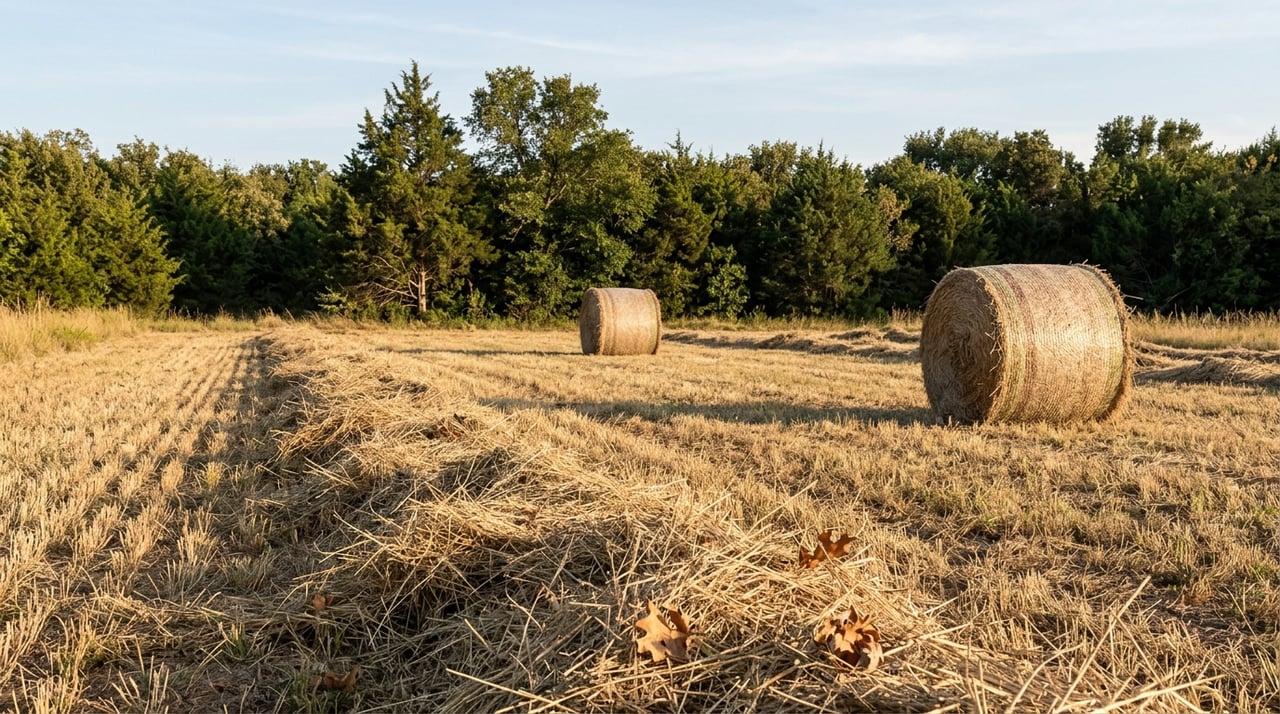
In Fannin County, hay production has specific standards. County guidelines state that hay production requires a 10-acre minimum, the hay must be a marketable product, and normal years should support two cuttings.
That means haying is not just mowing a field and calling it agriculture. To work well, it requires enough production, along with attention to forage species, soil fertility, weed control, harvesting, and storage.
For some owners, haying can be attractive because it puts open grassland to work. Still, it is usually more weather-sensitive and management-sensitive than a simple cash grazing lease.
Hunting leases and recreational access
If your land’s strongest value is recreation, a hunting lease may be worth considering. In Texas, hunting leases are a common way for owners to generate income from rural property without heavy capital spending.
Texas Parks and Wildlife says landowners may charge for hunting leases and may require liability waivers. The state also requires a hunting lease license when hunting rights are leased for pay or other consideration, with license categories based on acreage: small for 1 to 499 acres, medium for 500 to 999 acres, and large for 1,000 acres or more.
Short-term recreational access can also be an option. TPWD notes that public and short-term lease programs can include species such as dove, waterfowl, pheasant, quail, feral hog, squirrel, and rabbits, and limited public opportunities for deer, pronghorn, and exotics.
For owners who do not want full-season use, that creates a middle ground. You may be able to allow limited hunting pressure instead of committing the property to one long private lease.
Know what hunting income does not do
This is where many landowners get tripped up. A hunting lease can be a valid income stream, but it is not the same as qualifying agricultural use.
Fannin County guidelines list purely recreational uses as nonqualifying agricultural uses. TPWD also states that wildlife-management appraisal applies only to land that was already appraised as agricultural or timber land and that meets wildlife-management requirements.
In Fannin County, wildlife management is part of the Blackland Prairie region. It requires a TPWD wildlife management plan, an annual report, and minimum acreage standards of 12.5 acres for an individual owner or 16.6 acres for a wildlife organization or association.
So if you are asking whether a hunting lease alone will keep an ag valuation in place, the answer is no. If your income plan involves recreation, you need to confirm how that use fits with your current appraisal and whether additional wildlife-management requirements would apply.
Put every lease in writing
No matter which income path you choose, a written agreement is one of the smartest steps you can take. Texas A&M AgriLife recommends written grazing and hunting leases, and notes that certain leases lasting more than one year must be in writing to be enforceable.
A strong lease should do more than state the rent. It should spell out who can enter the property, when they can enter, which gates and roads they can use, and what happens if there is damage or a dispute.
Key terms often include:
- Names of the parties
- Length of the lease
- Legal or clear land description
- Payment amount and timing
- Access points
- Vehicle and ATV rules
- Gate and lock procedures
- Fence inspection expectations
- Use of barns, pens, water, or other facilities
- Insurance and indemnity terms
- Dispute resolution terms
- Other surface users on the property
If your tract has mineral activity, pipeline access, oilfield traffic, or other surface users, that should be clearly stated up front. Surprises on shared-use rural land can turn a good deal into a bad one very fast.
Think through liability and operations
Rural income is not just about rent collected. It is also about day-to-day control of the land.
With grazing, you need to know who checks fences, who monitors water, and how problems will be reported. With haying, you need clarity on equipment access, field condition, and timing. With hunting or recreational use, you need rules for guests, vehicles, gates, parking, and property boundaries.
TPWD says landowners may require liability waivers for hunting access. It also notes that liability protection for agricultural land used for recreation applies only in specific circumstances and only when insurance thresholds are met.
That is why operational details belong in writing before use begins. Good land management is often less about maximizing rent and more about minimizing confusion.
Review taxes before you sign
The same acreage can produce very different tax results depending on how the deal is structured. The IRS says farm income and expenses may go on Schedule F, flat-charge pasture rent is reported on Schedule E, and crop-share income without material participation goes on Form 4835.
If the landowner materially participates in producing farm products, farm rental income can be subject to self-employment tax. In plain terms, the tax outcome may change based on whether you have a cash lease, a crop-share arrangement, an active farm operation, or a true rental setup.
That is why a CPA review is worth having before you sign the lease. It is much easier to structure the agreement correctly on the front end than to fix tax treatment after income starts coming in.
A simple way to evaluate your tract
If you are trying to decide what fits your property, start with a short checklist:
- Does the land have water and fencing for grazing?
- Is there enough forage to support livestock without overgrazing?
- Does the tract have at least 10 acres and the grass production needed for marketable hay?
- Is recreational demand strong enough to support hunting access?
- Would the planned use support or affect your current agricultural appraisal?
- Do you want passive income, or are you willing to manage operations more actively?
- Are there other surface users, mineral issues, or access concerns to disclose?
- Have you had the lease reviewed before accepting payment?
That last point matters more than many owners realize. Once money changes hands, the practical and tax consequences become much more real.
Why buyers and sellers should care
If you are buying Fannin County land, income potential can shape what a property is worth to you. Existing fencing, pasture condition, access, and current use may all affect whether a tract is ready for grazing, haying, or limited recreation.
If you are selling, a realistic understanding of income options can help you position the property more effectively. Buyers often want to know not just what the land is, but what the land can do.
That is especially true with rural property near the broader Dallas-Plano-Irving pull, where buyers may be comparing lifestyle use, long-term holding, and income potential all at once. Clear facts, realistic expectations, and local guidance can make that conversation much easier.
Whether you are evaluating a legacy family tract or shopping for a new piece of country property, the details matter. In Fannin County, the best income plan is usually the one that fits the land, follows county rules, and keeps your long-term goals in view.
If you are buying, selling, or trying to understand the practical value of rural acreage in Fannin County, Bois D'Arc Realty brings broker-led guidance and local land experience to help you make the next move with confidence.
FAQs
Can a hunting lease keep an ag valuation in Fannin County?
- No. A hunting lease by itself is not the same as qualifying agricultural use, and purely recreational uses are treated differently under Fannin County guidelines.
Does Fannin County allow wildlife management appraisal on recreational land?
- Wildlife management can apply only if the land already qualifies in the required way and meets local wildlife-management rules, including a TPWD plan, annual reporting, and minimum acreage standards.
What is the minimum size for hay production in Fannin County?
- Fannin County guidelines state a 10-acre minimum for hay production, and the hay must be a marketable product.
Do seasonal grazing or hunting leases in Texas need to be written?
- Texas A&M AgriLife recommends written leases, and certain leases lasting more than one year must be in writing to be enforceable.
What should a Fannin County land lease include?
- A good lease should cover rent, duration, land description, access points, vehicle rules, gate procedures, fence and facility responsibilities, insurance terms, and any other surface users on the property.
Can changing land use trigger rollback taxes in Fannin County?
- Yes. County guidelines say a change from agricultural to non-agricultural use can trigger rollback taxes with a three-year lookback.