Buying rural land in Grayson County can feel simple until one question changes everything: How do you legally get to it? A road name, a gate, or even years of routine use do not always mean you have legal access. If you are buying, selling, or evaluating country property, understanding easements, private roads, and access rights can help you avoid expensive surprises. Let’s dive in.
Why access matters in Grayson County
With rural tracts, access is more than a convenience issue. It can affect whether a property is marketable, financeable, and easy to resell later. In Texas, land does not automatically gain legal access just because there is a path to it or because a neighbor has allowed use in the past.
That matters in Grayson County, where many properties sit on private lanes, shared driveways, or roads that may look public but are not county-maintained. The safest approach is to confirm access through the deed, survey, plat, and title commitment instead of relying on what a seller, neighbor, or mapping app says.
What legal access actually means
Legal access usually means the property has a documented right to reach a public road. In many cases, that right comes from a recorded easement. A recorded easement is important because it is more likely to be enforceable against future owners.
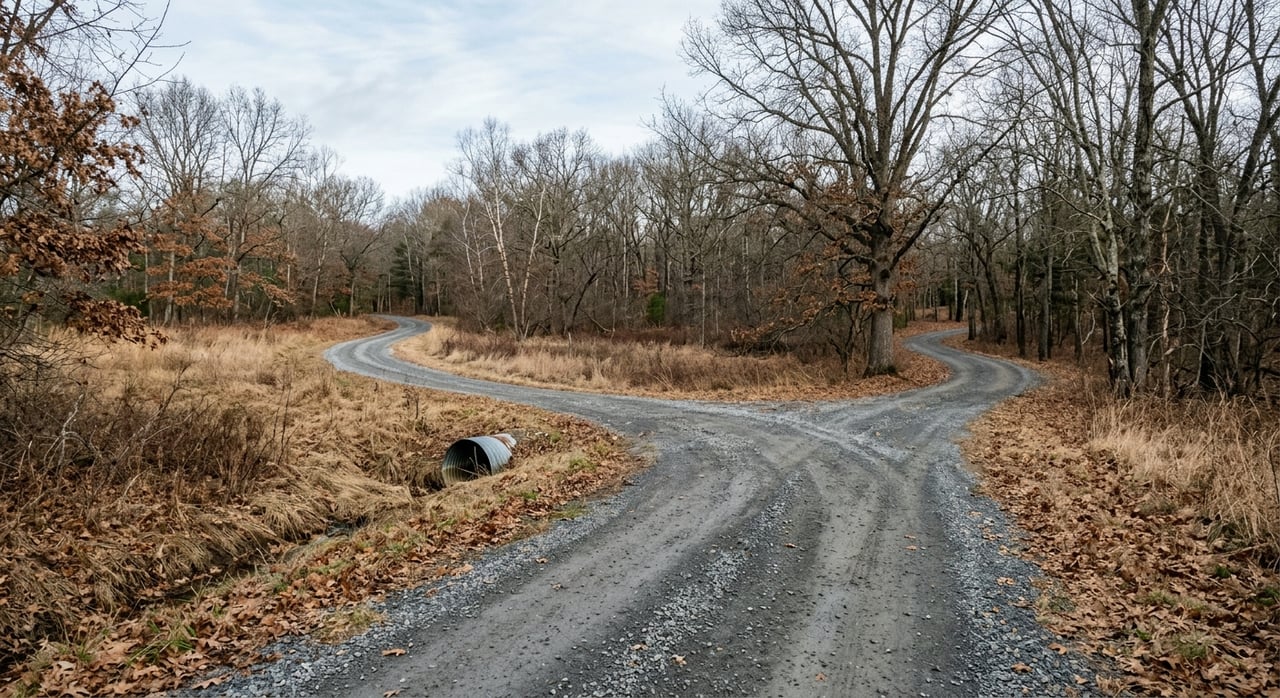
Texas law draws a clear line between a private road and a public road. A private road or driveway is privately owned and used by the owner and those the owner allows. That means a private lane may serve a tract just fine in practice, but the paperwork still has to support your right to use it.
Express easements
An express easement is the clearest form of access. It is a written grant from one landowner that allows another tract to cross the burdened property.
For buyers in Grayson County, this is usually the cleanest setup when the easement is recorded and clearly identifies where the access runs. It should also match the survey and the title work so the documents all tell the same story.
Landlocked property
A landlocked parcel has no legal access to a public road. In Texas, that does not automatically create a right to cross neighboring land.
Possible remedies can include an express easement, an easement by necessity, a prescriptive easement, an easement by estoppel, or in limited cases a county-ordered access road. Still, these are not quick assumptions you want to make during a transaction.
Easement by necessity
An easement by necessity is narrower than many buyers expect. Texas court guidance says the person claiming it must show the tracts were once under common ownership, that the necessity existed when they were split, and that the access is truly necessary rather than just more convenient.
That is why a hard-to-reach tract is not always legally landlocked in a way that creates an easy solution. If access depends on proving necessity, you should treat the issue carefully and early.
Prescriptive easements
A prescriptive easement can arise from long-term use, but it is difficult to prove. Texas guidance generally requires 10 years of open, continuous, exclusive, and adverse use.
If the use was only by permission, the claim usually fails. So if someone says, “We’ve always used that lane,” that history alone may not create a legal right of access.
How Grayson County treats private roads
In Grayson County, not every road is the same. County subdivision regulations distinguish public roads from county roads, and a county road is a public road that has been accepted for maintenance by the Commissioners Court.
A private road is different. If a road has not been accepted for maintenance, the county is not responsible for maintaining it. That is a key point for both buyers and sellers, especially with homes on acreage, farm tracts, and development-ready parcels.
Private subdivision roads
For private subdivision roads, Grayson County requires compliance with subdivision standards. Those roads must be maintained by the owners or the homeowners association.
The county also states it will not accept or maintain those roads unless they meet county engineering standards at the time of acceptance. In addition, deeds must include notice that the roads are private and not county-maintained.
Emergency access standards
Private roads in Grayson County also have emergency-access rules that matter. The county generally requires a minimum 60-foot access easement for private streets or roads unless the Commissioners Court grants a waiver.
The regulations also require a travelable all-weather surface capable of supporting 75,000 pounds for emergency access. For buyers looking at newer splits or rural subdivisions, this is an important detail to verify.
Shared driveways
Shared access driveways can work, but they need clear documentation. In Grayson County, affected lots must have recorded easement rights, and the easement must explain each lot’s maintenance share.
That means a shared driveway should not be based on a verbal understanding. If multiple owners use the same drive, the documents should spell out who can use it, who repairs it, and how those obligations are divided.
Why recorded documents matter most
If you are researching access in Grayson County, the county clerk’s real property records are the starting point. The county maintains official public records dating back to 1846, and plats are filed when a legal boundary changes.
For that reason, deed history and recorded plats matter more than a mailbox, a road sign, or a long-used path on the ground. If a final plat in unincorporated Grayson County was required, it also needed Commissioners Court approval before recording.
A road or access arrangement that was never properly platted or recorded deserves extra scrutiny. In rural transactions, missing paperwork often causes bigger problems than rough roads.
How title companies and lenders see access issues
Access problems do not just affect convenience. They can become title and financing issues that delay or derail a closing.
The Texas Department of Insurance identifies lack of access as a title defect. It also advises buyers to compare the legal description in the title policy with the survey and the earnest money contract before closing.
For financed purchases, the issue can become even more important. Fannie Mae guidance requires properties to be readily accessible by roads that meet local standards, and properties on privately maintained streets generally need a legally enforceable recorded maintenance agreement.
That agreement typically needs to address repair responsibility, default remedies, and a generally perpetual term. For rural properties, the exact property type and loan program also matter because some land categories do not fit standard conventional guidelines.
Red flags buyers should not ignore
Some access issues are clear warnings that more due diligence is needed. If you see one of these, slow down and verify the documents before moving forward.
- Access is described as “by permission” or based on a handshake agreement
- The parcel appears landlocked or the route is not shown in recorded documents
- A road is called private, but there is no recorded maintenance covenant or easement allocation
- The title commitment includes an access-related exception
- The survey and deed description do not line up cleanly
- A shared driveway serves several tracts, but the documents do not assign repair duties
- The tract is in a subdivision where the road was never clearly accepted, dedicated, or platted for the claimed use
Access issues that are often manageable
Not every private-road setup is a deal killer. Many country properties close smoothly when the documents are complete and consistent.
These situations are usually more manageable:
- A recorded express easement clearly identifies both the access strip and the benefited tract
- A recorded maintenance agreement explains who repairs a private road or shared driveway
- The survey, title commitment, and deed history all match
- A negotiated easement or planned county-ordered access road is documented before closing
The key is not whether the road is private. The key is whether your legal rights and maintenance responsibilities are clearly documented.
A smart due-diligence checklist
When you are buying rural property in Grayson County, access should be part of your early review, not a last-minute question. A few careful steps can help you spot trouble before it becomes a closing issue.
What to review before closing
- Pull the deed chain and look for recorded easements, reservations, or road dedications.
- Review the survey for the exact access strip, fence lines, and any encroachments or gaps.
- Read the title commitment for access exceptions and compare it with the survey and contract.
- Confirm whether the road is public, county-maintained, private, or simply a private easement that functions like a road.
- If the property uses a private road or shared driveway, verify maintenance terms, emergency-access standards, and who can enforce the agreement.
- If the tract may be landlocked, talk with the lender and title company early because legal access can determine whether the property is financeable.
What this means for buyers and sellers
If you are buying, complete access documents can give you more confidence in what you are purchasing. They also help protect your future resale options. In a rural market, the right paperwork can be just as valuable as the right location.
If you are selling, access questions are worth addressing before your property hits the market. A recorded easement, a clear survey, and a workable maintenance agreement can reduce friction and make your listing easier for buyers, title companies, and lenders to evaluate.
In Grayson County, the strongest setup is usually a written, recorded easement that matches the survey and title work, along with clear maintenance language for any private road or shared driveway. That kind of preparation helps turn a potentially messy issue into a predictable transaction.
When you are evaluating country property, local knowledge matters. The team at Bois D'Arc Realty helps buyers and sellers navigate rural property details in Grayson County with practical, broker-led guidance.
FAQs
What is legal access for rural property in Grayson County?
- Legal access usually means the property has a documented right, often through a recorded easement, to reach a public road.
What is the difference between a private road and a county road in Grayson County?
- A county road is a public road accepted for maintenance by the Commissioners Court, while a private road has not been accepted for county maintenance.
Can a landlocked property in Texas automatically use a neighbor’s road?
- No. Texas does not automatically create access rights for landlocked property, and any claimed remedy must meet specific legal standards.
Why do title companies care about access in Grayson County transactions?
- Lack of access can be treated as a title defect, which can affect insurability, financing, closing, and future resale.
What should a shared driveway agreement include in Grayson County?
- It should include recorded easement rights for the affected lots and clearly state each lot’s maintenance share.
What is a major red flag when buying land on a private road?
- A major red flag is access based only on verbal permission or a handshake agreement, with no recorded easement or maintenance document.
What county records should buyers review for access questions in Grayson County?
- Buyers should review the deed history, recorded plats, survey, and title commitment to confirm where access runs and who has rights to use it.