Buying land in Fannin County can be exciting, but it can also get complicated fast. A great-looking tract may raise bigger questions about access, septic, floodplain, platting, or lake-area rules once you start digging into the details. If you want to buy with confidence, this step-by-step guide will help you understand what to check, when to check it, and how to avoid common surprises before closing. Let’s dive in.
Start With Your Land Goals
Before you look at acreage, get clear on what you want the property to do for you. Your intended use shapes almost every part of the purchase, from financing to due diligence to the type of contract that fits the property.
In Fannin County, your plan might be a future homesite, a recreational tract, a farm or ranch purchase, or land you may want to divide later. Each path can bring different requirements, especially in unincorporated areas where subdivision rules, access standards, drainage, and sewage considerations matter.
Match Financing to the Property
Financing for land is not always one-size-fits-all. If you are buying farmland and meet eligibility requirements, USDA Farm Service Agency farm ownership loan programs may be an option for farmland purchases, including direct, guaranteed, and down-payment-style loans.
If your purchase is for another use, it helps to confirm your financing path early so you know your budget and timeline. That can make your offer stronger and help you move faster once you find the right tract.
Search Land With the Legal Setup in Mind
In Fannin County, a land search should go beyond acreage, road frontage, and price. Before you make an offer, you should verify how the property is legally described and whether the public records match what is being marketed.
The Fannin County Clerk records deeds, liens, deeds of trust, abstracts, plats, and related instruments. The office also states that many land records and plats are available online, while older records may be available in person.
Check Ownership and Plat Status
A smart first step is confirming ownership history and checking whether the tract is already platted or is still described by metes and bounds. This matters because a recorded final plat is generally required before lots are sold, according to the County Clerk’s public-record information.
If you are looking at a tract that may have been split off from a larger property, this becomes especially important. A parcel that seems straightforward in a listing can have a very different story once you review the recorded records.
Watch for ETJ and Lake-Area Rules
Some Fannin County properties have an extra layer of regulation. County subdivision regulations note that if land sits in a city’s extraterritorial jurisdiction, or ETJ, the more restrictive municipal rule can apply.
Lake-area land can also need added review. Fannin County has separate zoning frameworks for Bois d’Arc Lake and Lake Ralph Hall, and county planning materials state that Fannin County has zoning authority within 5,000 feet of the Bois d’Arc Lake shoreline.
Use the Right Texas Contract Form
Not all land contracts are the same in Texas. The contract form should match the actual legal and physical characteristics of the property.
The Texas Real Estate Commission says the Unimproved Property Contract is generally used for platted property without buildings. The Farm and Ranch Contract is generally used for rural properties described by metes and bounds from a survey.
Why Contract Choice Matters
Using the right form helps the transaction reflect the property you are actually buying. That is especially important in rural land deals, where survey issues, access questions, and legal descriptions often carry more weight than they do in a typical home purchase.
A broker who regularly handles rural property can help spot these differences early. That can save time and reduce the risk of problems showing up late in the process.
Order Title Work and a Survey Early
Title and survey review are essential in a Fannin County land purchase. Rural properties can involve easements, boundary questions, access issues, and restrictions that do not always show up in a quick online search.
The Texas Department of Insurance notes that title insurance protects against unknown title defects, and lenders usually require a loan policy when financing is involved. TDI also advises buyers to compare the legal description in the title policy against both the survey and the earnest money contract before closing.
What to Look for in Title and Survey
As you review title and survey materials, pay close attention to:
- Easements
- Boundary discrepancies
- Access problems
- Unrecorded restrictions
- The consistency of the legal description across all documents
These are common issues on rural land. Catching them early gives you more time to evaluate whether the property still fits your goals.
Complete Fannin County Due Diligence
This is where a land purchase becomes very local. In Fannin County, due diligence should focus on the practical items that affect whether you can use the property the way you intend.
For many buyers, the biggest categories are access, roads, water, septic, floodplain, and tax treatment. If you may divide the land later, subdivision rules should also be part of your review.
Confirm Access and Road Standards
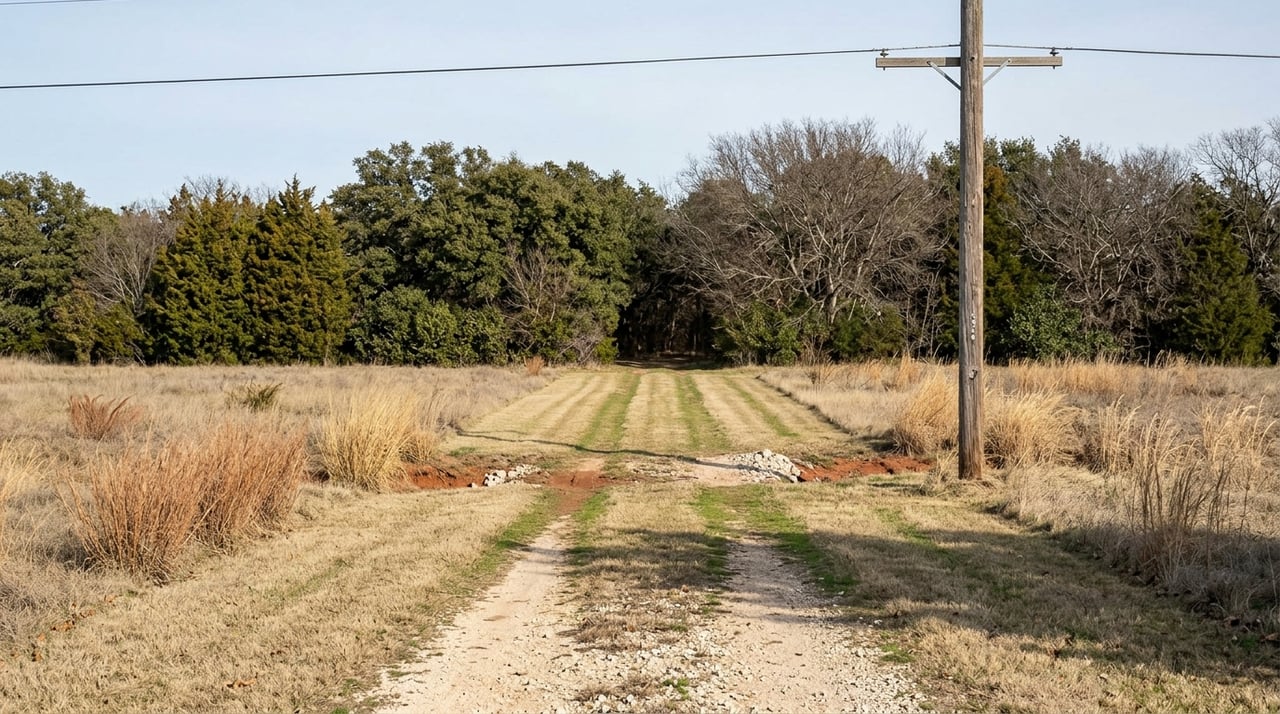
Access is one of the most important checks on rural land. Fannin County subdivision regulations state that lots must abut and have direct access to a county street or road, or to a qualifying private or public road built to county standards with the required dedicated right-of-way.
If the tract is served by a private road, look closely at long-term maintenance. The county rules state that private-road subdivisions must have perpetual maintenance arrangements unless the roads are later accepted by the county.
Think Ahead About Splitting the Property
If you may want to divide the tract in the future, ask questions now instead of later. Fannin County’s subdivision regulations note that a plat may not be required only in certain situations, including when all daughter tracts are more than five acres and no public-use streets or similar dedications are laid out.
That does not mean every future split is simple. It means the details matter, and the property’s layout, road access, and intended use should be reviewed before you buy.
Check Water and Well Requirements
If the property will rely on a well, you need to understand the local process. Fannin County is within the Red River Groundwater Conservation District, and the district states that all new water wells must be registered and must receive a Notice to Proceed before drilling and operation.
For some subdivisions using individual wells, county subdivision regulations also say an engineer’s report may be required to show there is an adequate groundwater supply. That makes water planning more than just a drilling question.
Review Septic and 911 Addressing
If public sewer is not available, septic review should happen early. The Texas Commission on Environmental Quality says permits are generally required to construct, install, alter, extend, repair, or operate an on-site sewage facility, and local permitting authorities may be stricter than the state minimums.
Fannin County’s septic guide says buyers should expect a site evaluation, deed copy, an assigned 911 address, permit review, authorization to construct before work begins, inspection before the system is covered, and authorization to operate after a successful inspection. The guide also states that aerobic systems require an ongoing maintenance or service contract.
Verify Floodplain and Drainage Issues
Floodplain and drainage can affect where and how you build. Fannin County subdivision regulations require floodplain information to be shown on plats, and they state that a development permit is required from the county before construction in the floodplain.
The same regulations note that floodway encroachments may require engineering review, drainage easements are required, and the county is not responsible for private-lot drainage protection. In short, you want a clear picture of water movement before you close.
Understand Property Taxes and Ag Appraisal
Property taxes can look very different on rural land depending on how the property is currently appraised. Texas has no state property tax, while local taxing units set rates and appraisal districts handle local valuation.
Fannin CAD provides agricultural-history and agricultural-land survey forms, which can be useful if you are trying to preserve or pursue agricultural appraisal. The Texas Comptroller says qualifying agricultural or open-space land may be taxed on productivity value rather than market value, and changing the land to non-agricultural use can trigger rollback taxes.
Know Which Local Offices Matter
A Fannin County land purchase often touches several offices and providers at once. Understanding who does what can make the process feel much more manageable.
The key local offices mentioned in county materials include:
- Fannin County Clerk for deeds, liens, plats, and official public records
- Fannin CAD for property search tools and agricultural forms
- Development Services for subdivision matters, lake zoning, 911 addressing, and permitting
- Environmental Development for septic permits
Because each office affects a different part of the transaction, timing matters. A delay or unanswered question in one area can affect your next step somewhere else.
Close and Record the Deed Properly
Once your due diligence is complete and you are ready to close, the final step is making sure the deed and related documents are properly recorded. The Fannin County Clerk states that the office records deeds and plats and can record properly signed and notarized documents.
The clerk’s public information also notes that deed-transfer documents should usually be prepared by an attorney or title company before recording. After closing, you can also sign up for the county’s free property fraud alert service.
Why Local Rural Experience Helps
Land transactions in Fannin County often involve more moving parts than buyers expect. Title review, survey timing, access questions, subdivision rules, well registration, septic permitting, floodplain review, and tax treatment can all affect the same purchase.
That is why local, broker-led guidance matters. When you work with a team that understands country property in Fannin County, you are better positioned to sequence the transaction correctly, ask the right questions early, and keep the process predictable from contract to closing.
If you are planning to buy land in Fannin County, working with a rural property specialist can help you move forward with more clarity and fewer surprises. The team at Bois D'Arc Realty brings hands-on local experience in country property, land, farms, ranches, and rural acreage across North Texas.
FAQs
What should you check before buying land in Fannin County?
- You should review ownership history, recorded plats, legal description, access, road frontage, well or water options, septic requirements, floodplain status, tax treatment, and any ETJ or lake-area rules that may apply.
How do you know if a Fannin County tract is platted?
- You can check the Fannin County Clerk’s land records and plats to confirm whether the property has a recorded final plat or is still described by metes and bounds.
What contract is used for rural land in Texas?
- The Texas Real Estate Commission says the Unimproved Property Contract is generally used for platted property without buildings, while the Farm and Ranch Contract is generally used for rural property described by metes and bounds from a survey.
Do you need septic approval for land in Fannin County?
- If the property will use an on-site sewage facility, permits are generally required, and Fannin County’s process includes a site evaluation, assigned 911 address, permit review, construction authorization, inspection, and authorization to operate.
Are there special rules near Bois d’Arc Lake or Lake Ralph Hall?
- Yes. Fannin County has separate zoning frameworks for Bois d’Arc Lake and Lake Ralph Hall, so lake-adjacent parcels may require an added zoning review beyond standard rural land due diligence.
Can you drill a water well on land in Fannin County?
- New wells in Fannin County fall under the Red River Groundwater Conservation District, which states that wells must be registered and receive a Notice to Proceed before drilling and operation.