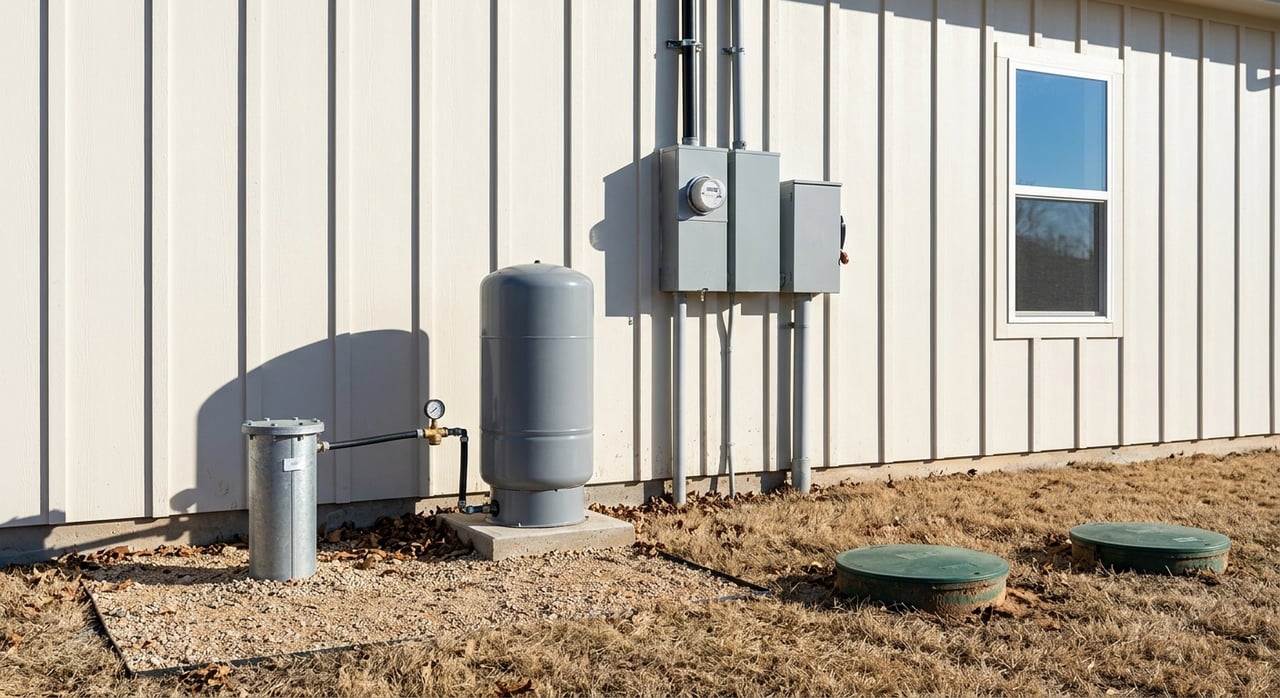
Buying acreage in Grayson County can feel simple at first glance. You see open land, a good building site, and room to spread out. Then the real questions show up: Does it have water? Will it need a septic system? Who provides power? How much will all of that cost? If you are shopping for country property, these utility details can shape whether a tract is practical, buildable, and affordable. Let’s dive in.
Why utilities matter on Grayson County acreage
In Grayson County, one acreage tract may have rural water and electric service nearby, while another may depend on a private well, septic system, and longer utility extensions. That mix is common across the county, which is why parcel-level research matters more than broad assumptions about “country property.”
The county’s subdivision process reflects that reality. For plats, Grayson County requires utility providers to be identified and requires will-serve letters from water, sewer, electric, and natural gas providers. If a subdivision proposes individual wells, the county may also require an engineer’s report showing groundwater supply is adequate.
That matters even if you are buying a single tract rather than developing multiple lots. In practical terms, utilities are often one of the biggest factors in how much cash you need up front, how quickly you can build, and how much maintenance you will handle after closing.
Public water is not automatic
Many buyers assume acreage in Grayson County will either have a well or have easy access to city water. The reality is more mixed. The Texas Water Development Board lists a broad range of municipal and rural water providers in the county, including Sherman, Denison, Gunter, Howe, Pottsboro, South Grayson SUD, Northwest Grayson County WCID 1, Oak Ridge South Gale WSC, and Mustang SUD.
That sounds encouraging, but service areas are fragmented. A nearby home may be served by a provider that does not serve your tract, or your parcel may be close to a line but still require extensions, easements, or provider approvals before service can be added.
There is another point buyers often miss. Public water does not always mean unlimited supply. In the Texas Water Development Board’s 2024 county summary, some smaller Grayson County systems were flagged as sole-source or as having reported 180 days or less of supply. That does not mean every public-water tract is a problem, but it does mean you should verify the specific provider and service situation for the property you want.
What to confirm about water service
Before you move forward on a tract, ask:
- Which water provider serves the property
- Whether the tract already has a meter or active service
- Whether line extensions or easements are needed
- Whether a will-serve letter is available for new construction or subdivision planning
- Whether the provider has any timing, capacity, or service limitations affecting the tract
Private wells come with local rules
Not every acreage property will connect to a public or rural water system. Some tracts rely on private wells, and in Grayson County that means local groundwater rules matter.
Grayson County falls within the Red River Groundwater Conservation District. The district requires all new wells to be approved and registered before construction begins. New non-exempt wells also require a production permit.
The district defines an exempt well as one not capable of producing more than 17.36 gallons per minute. Even when a production permit is not required, exempt wells are still encouraged to be registered. For non-exempt wells, the district requires meters and reporting.
Ownership history matters too. The district says wells that have transferred ownership since April 1, 2012 must be registered within 90 days of transfer. If you are buying acreage with an existing well, registration status should be part of your due diligence.
What to review for an existing well
If a property has a private well, ask for:
- The well report showing depth, date drilled, owner, and intended use
- Registration status with the Red River Groundwater Conservation District
- Any permit records if the well is non-exempt
- Current service and repair history
- Recent water-quality testing
The Texas Water Development Board recommends using the state well-report viewer to verify core well details. It also notes that private well water quality is not regulated by the state, which means the owner is responsible for identifying and addressing water-quality issues.
Well testing and well costs
Testing is usually affordable compared with drilling or treatment work. The Texas Water Development Board says bacteriological testing for coliforms and E. coli can start around $20, while a full drinking-water analysis can run up to $400 depending on the lab and test panel.
Drilling and equipping a well is a different story. In Texas Water Development Board planning examples, a private well was budgeted at $18,000 per home in one model, while another full private-well system example reached $35,000 installed, including drilling, pump equipment, treatment, and disinfection. These are not Grayson County bids, but they are useful planning benchmarks if you are comparing a tract with public water against one that will need a full well setup.
Septic systems are tightly regulated
If a tract is not connected to public sewer, you may need an on-site sewage facility, often called a septic system. In Texas, the Texas Commission on Environmental Quality says an OSSF permit and approved plan are required to construct, alter, repair, extend, or operate a system. The site must also be evaluated first by a licensed site evaluator or licensed professional engineer.
That is the statewide baseline. In Grayson County, local OSSF rules are more specific, and those local rules matter.
The county requires an application, permit, authorization to construct, and inspection for construction, alteration, extension, or repair of residential and commercial OSSFs regardless of tract size. If a parcel is within 100 feet of public sewer, connection is required unless the county engineer approves an exception.
Grayson County septic lot-size rules
The minimum lot size for a septic system depends on two things:
- Whether the parcel is served by public water
- Whether the system uses drip irrigation
For parcels not served by public water:
- Minimum 1.5 acres for non-drip systems
- Minimum 1 acre for drip irrigation systems
For parcels served by public water:
- Minimum 1 acre for non-drip systems
- Minimum 0.5 acre for drip irrigation systems
The county also requires aerobic treatment on parcels under 2.5 acres. That is a major detail for buyers looking at smaller rural homesites, because aerobic systems are generally more complex than conventional septic systems.
Septic maintenance matters after closing
A septic system is not just an installation issue. It is an ownership issue too. Grayson County allows homeowner self-maintenance of aerobic systems only after county-approved training and a signed agreement. Otherwise, a licensed maintenance provider is required.
TCEQ also notes that aerobic systems generally require more maintenance than simpler systems. For conventional septic tanks, TCEQ recommends pumping every three to five years.
Septic cost planning
Septic costs should be treated as a range, not a fixed number. In one Texas Water Development Board rural subdivision planning model, a conventional septic system was budgeted at $8,000 per home and an advanced septic system at $10,000 per home. These are planning examples rather than local quotes, but they help show how quickly a utility budget can grow on raw acreage.
Electricity may be available, but not simple
Power access is another item buyers tend to oversimplify. In Grayson County, the likely electric provider depends on the tract. Oncor’s certified service area includes Grayson County, Grayson-Collin Electric Cooperative serves members in Grayson and Collin counties, and CoServ also serves North Texas including Grayson County.
That means the nearest road or neighboring house may not tell you the full story. A parcel can be near electric infrastructure and still face added cost or delay if service must be extended or if easements are needed.
For development and platting, Grayson County requires utility letters and service schedules from relevant utility companies. Even for a single homesite purchase, that same mindset is smart. You want to know not just whether power exists in the area, but whether the exact tract can be served in a practical time frame and at a realistic cost.
A simple due diligence checklist
Before you buy acreage in Grayson County, it helps to slow down and verify the basics. A tract that looks straightforward on paper can become much more expensive if water, septic, or electric service is uncertain.
Use this checklist as a starting point:
- Confirm the actual water provider for the tract by address
- Ask whether the property has an active meter, approved service, or will require a new connection
- Verify the electric provider and whether line extensions are needed
- Ask for septic permits, site evaluations, as-built records, and inspection history if a system already exists
- Confirm whether the parcel is within 100 feet of public sewer and whether sewer connection is required
- If the system is aerobic, ask for the current maintenance contract or county-approved self-maintenance agreement
- Request the well report, registration details, and any permit records for an existing well
- Ask for recent water-quality test results for private wells
- Build a budget that allows room for utility work, testing, permits, and possible delays
Why this matters before you close
On Grayson County acreage, utilities are not side issues. They often determine whether a tract can support the home or use you have in mind, how long your project will take, and how much you will spend before you ever break ground.
That is especially true for buyers moving from suburban areas into country property. Rural land can offer privacy, flexibility, and space, but it also asks you to pay closer attention to infrastructure than you would on a typical in-town home purchase.
A careful review up front can save you from expensive surprises later. If you want steady, local guidance on acreage in Grayson County, Bois D'Arc Realty can help you sort through the practical details before you buy.
FAQs
What utilities should you verify before buying Grayson County acreage?
- You should confirm water source, septic or sewer setup, electric provider, extension needs, and any permits or service approvals tied to the specific tract.
Does Grayson County acreage always need a private well?
- No. Some tracts are served by municipal or rural water systems, but service areas are mixed, so you need to verify the specific property by address.
Do septic systems in Grayson County require permits?
- Yes. Grayson County requires an application, permit, authorization to construct, and inspection for construction, alteration, extension, or repair of OSSFs.
When is sewer connection required in Grayson County?
- If a parcel is within 100 feet of public sewer, connection is required unless the county engineer approves an exception.
Are aerobic septic systems common on smaller acreage tracts?
- Yes. Grayson County requires aerobic treatment on parcels under 2.5 acres.
What should you ask for when a Grayson County property has a private well?
- Ask for the well report, registration status, any permit records, service history, and recent water-quality testing.
Does a private well in Grayson County need to be registered?
- New wells must be approved and registered before construction begins, and wells that transferred ownership since April 1, 2012 must be registered within 90 days of transfer.
Can electricity costs vary from one acreage tract to another?
- Yes. Provider territory, line-extension distance, easements, and timing can all affect cost and feasibility, even between nearby parcels.